
1. Does it hurt to place a dental implant?
No. The procedure is performed under local anesthesia, so the patient feels no pain during the surgery.
After the intervention, a slight discomfort or swelling may appear during the first few days, but it is easily controlled with medication prescribed by the dentist.
2. How long does an implant last?
With good hygiene habits and regular check-ups, an implant can last a lifetime.
Long-term success depends on proper placement, bone quality and daily patient care.
3. What materials are used?
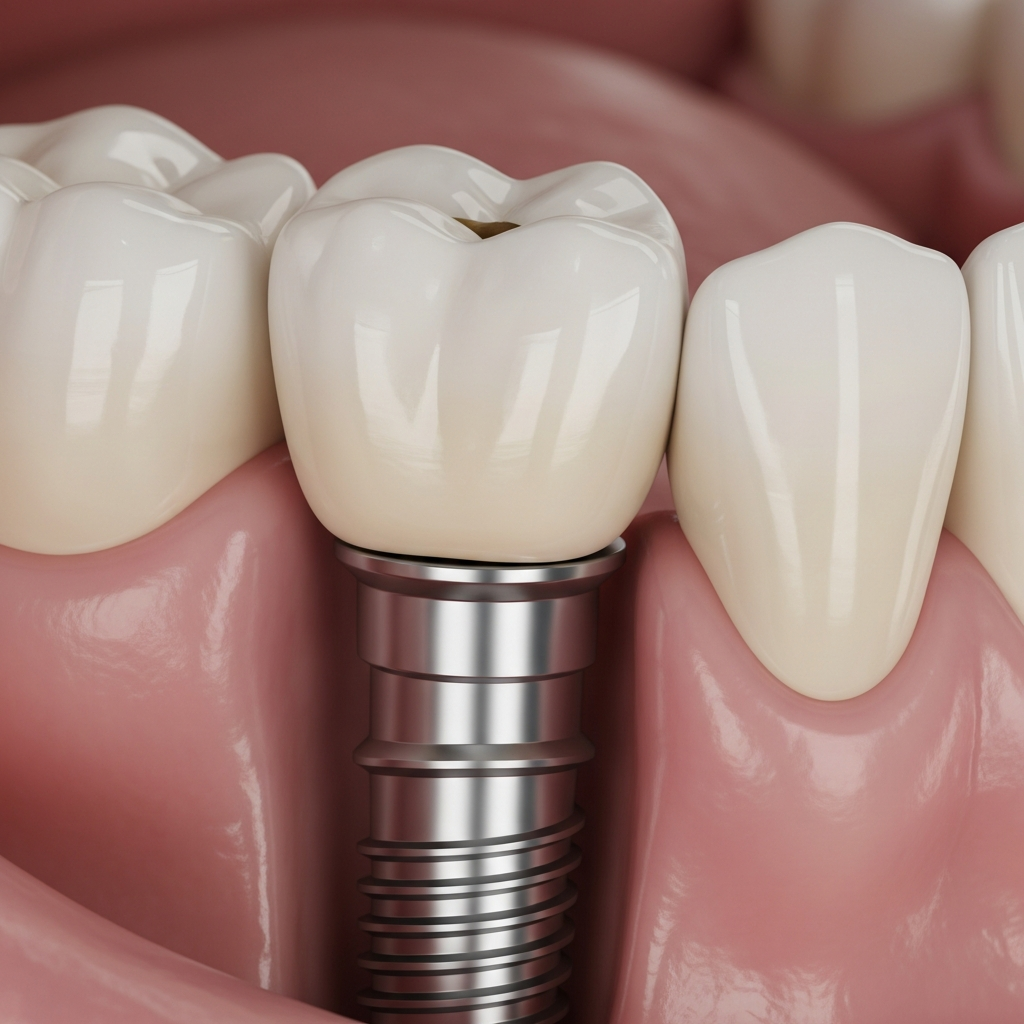
Most implants are made of titanium, a biocompatible material that integrates perfectly with the bone (osseointegration).
There are also zirconium alternatives, ideal for patients with allergies or who are looking for a more esthetic and metal-free solution.
4. Is everyone suitable for implants?
In most cases, yes, however, it is essential to carry out a previous study of the bone by means of X-ray or 3D scanner.
If the patient has lost a lot of bone, bone regeneration techniques or grafts can be applied before placing the implant.
5. What care does a dental implant need?
Implants require meticulous daily hygiene (brush, floss or interdental brushes) and professional check-ups at least once a year.
Avoiding smoking and controlling diseases such as diabetes also help to keep them in perfect condition.